Lensun 90W Hood Solar Panel Review: Why I Stopped Gambling With My Battery
It’s Monday morning, 8am. Getting ready for work after a weekend camping trip and my truck wouldn’t start.
That’s the thing about running everything off a starter battery. Lights, portable fridge, power station; it all draws from the same place, and when the alternator isn’t running to top it back off, the math eventually catches up with you. I knew this going in and for some reason, I did it anyway.
Fortunately I had a spare battery sitting in the shed. Jumped in the truck, made it to work, spent the rest of the day thinking about how to make sure it never happened again. The problem isn’t driving. When I’m wheeling or driving on a long trip, the alternator keeps things topped off. The problem is parked. Days out in the middle of nowhere with the truck sitting, electronics constantly drawing power, and nothing putting charge back in. And beyond getting stranded, cycling a starter battery down that low repeatedly is a fast way to kill it early.
I needed something passive. Something that worked without me thinking about it.
This article contains affiliate links meaning I may earn a small commission on purchases through the links at no additional cost to you. I Appreciate You Supporting The Content and Keeping the Adventures Alive!
Why I Chose a Hood Solar Panel
I have a portable solar panel and have used it for a while, the problem is they are annoying to set up and most of the time I’m not stationary long enough for it to make any difference. With my new camper, mounting a solar panel on the top of the tent was (and still kind of is) on the table too but that meant committing to a more involved install, and taking up real estate where I usually strap down kayaks my “makeshift patio” where I like to sit and enjoy the view. Running wires through the cab was also something I didn’t fully want to tackle yet and wanted something that gave me a faster solution.
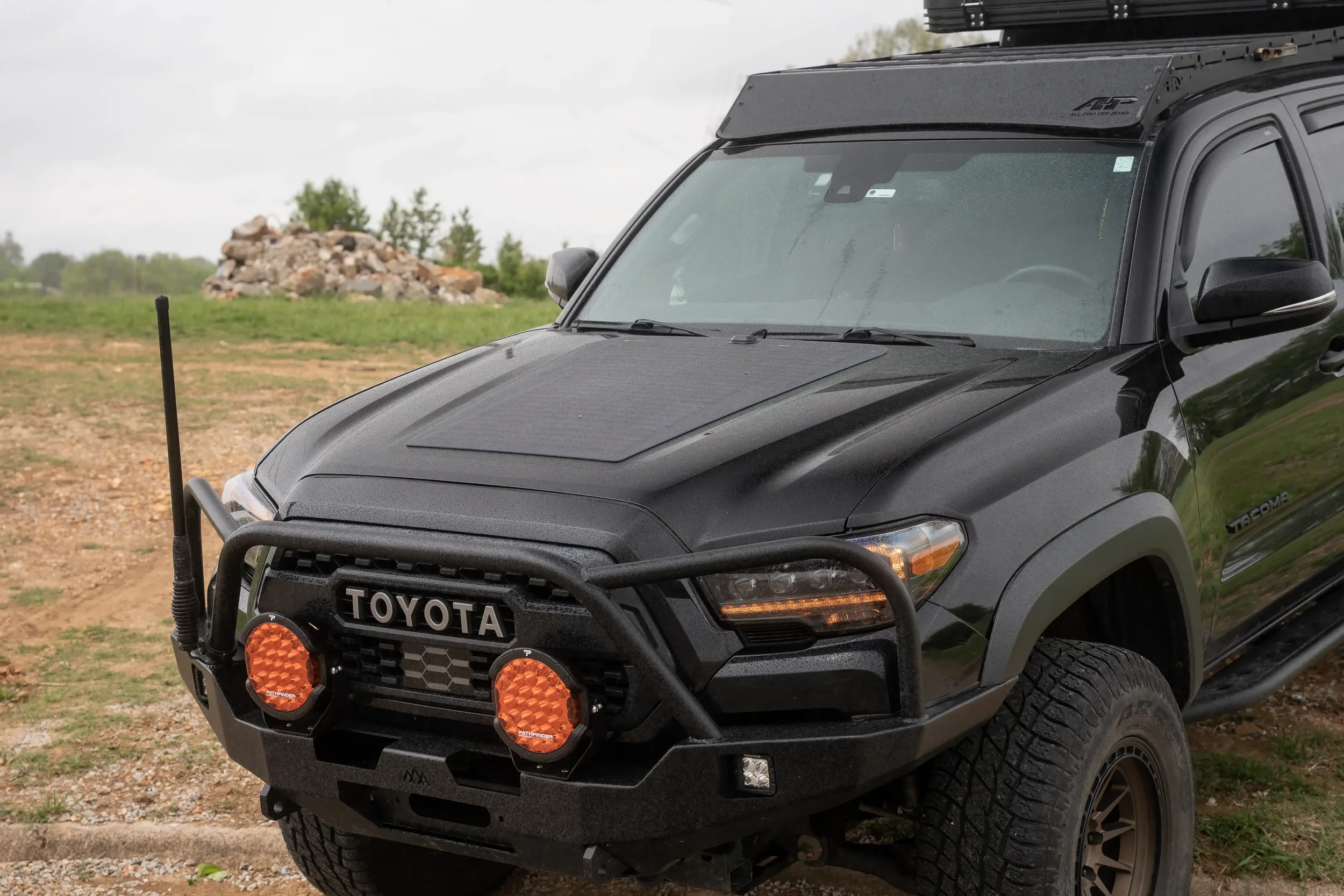
The hood made sense. It's always facing the sky, it’s easy to park in direct sunlight, it’s just unused space, and it’s a short distance to wire to the battery. The Lensun panel is semi-flexible and follows the contour of the hood nicely. On the Tacoma it sits low enough that it doesn't affect sight lines and actually reduces sun glare.
Installing the Lensun Panel on my Tacoma
The install process was really straight forward, even for someone like me who hates wiring and electrical. It took a total of maybe 30 minutes from start to finish.
I opted for the full kit which included the solar panel, MPPT controller, and hood protector vinyl. Although I know people who have done it without issues, I still went with the vinyl decal since I didn’t want to install it directly on the paint. For the decal install, I actually used a local wrap shop that did it for $50 (their minimum labor hours) since I’ve never used vinyl wrap before. They said it was a wet apply so it actually makes it a little easier to install if you choose to do it yourself.
The install is as straight forward as possible; unbox the panel and controller, put the included 3M tape around the full edge of the panel and center, stick it down in the center of the hood, wire the MPPT solar controller to the battery and connect it to the panel, and you’re done.
How the Solar Panel Works
The Lensun connects to an MPPT controller, which is the brain of the system. MPPT stands for Maximum Power Point Tracking -- it continuously adjusts how it pulls power from the panel to maximize what actually makes it into the battery. A cheaper PWM controller just dumps whatever the panel produces. The MPPT controller is smarter about it, which matters most on partially cloudy days or when the sun angle isn't ideal.
The controller wires directly to your battery and manages everything from there. Lensun's controller pairs with a Bluetooth app that shows you live voltage, current, wattage, and battery state. I didn't think I'd care about that. I check it constantly now.
WHAT THE NUMBERS ACTUALLY LOOK LIKE
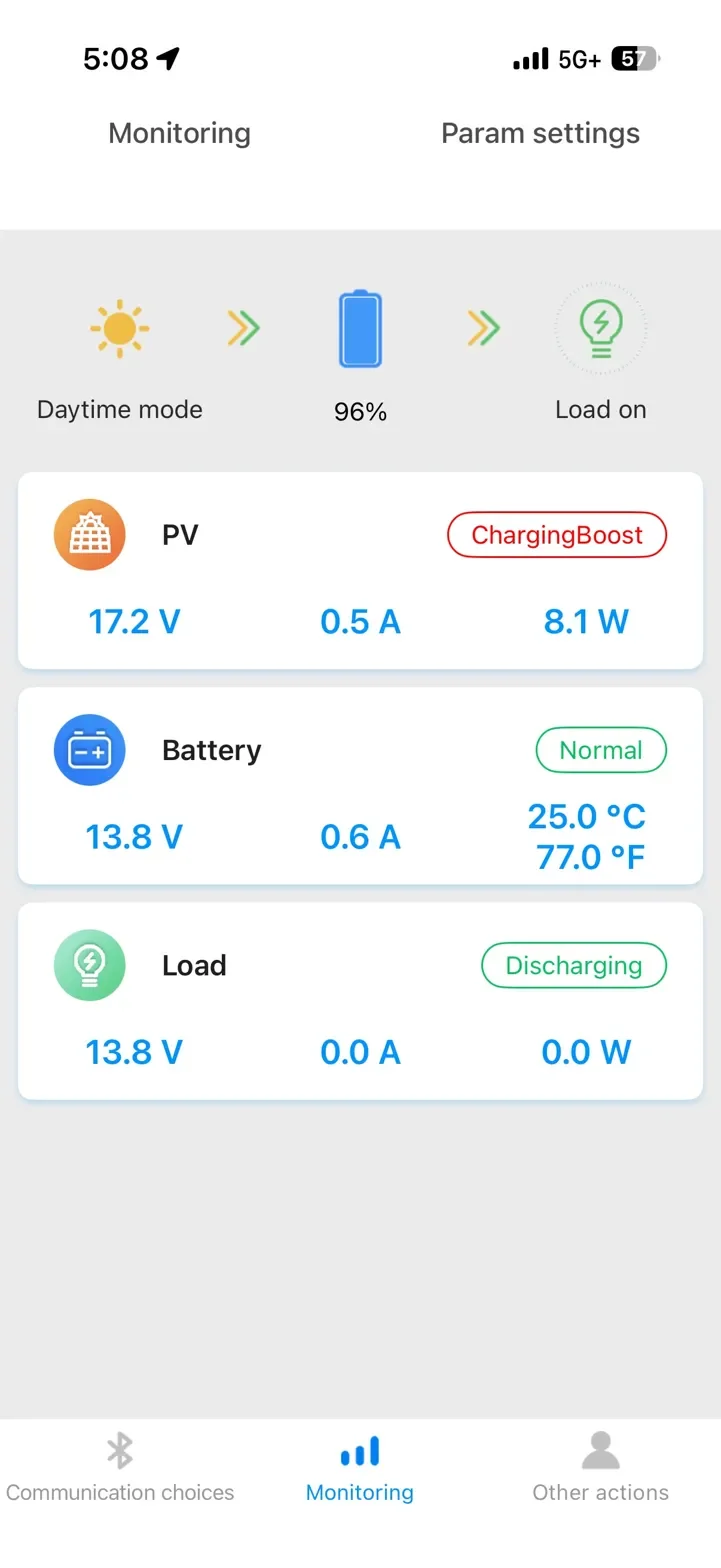
This is the panel actively charging. 17.2V off the panel, 8.1W pushing into a battery sitting at 13.8V. ChargingBoost is the controller working hard -- it's not perfect conditions, not peak sun angle, and it's still moving charge into the battery.
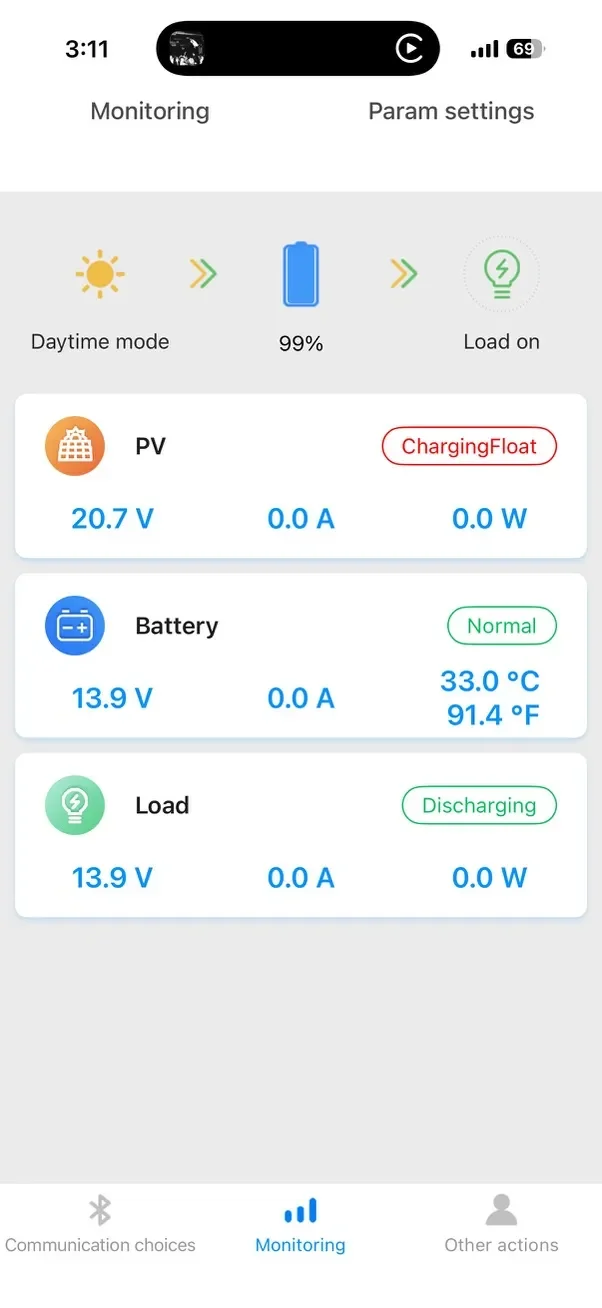
The next day, clear sky, battery up to 99% at 13.9V. The controller switched itself to ChargingFloat. No current flowing because the job was done. Float mode just holds the battery topped off without overcharging it.
That's the whole system working exactly as it should. Found a battery that needed charge, filled it, backed off. The fact that you can watch it happen in real time through the app is genuinely useful, not just a gimmick.
That sequence is the whole pitch for solar. Panel came on in the evening, found a battery that needed charge, filled it, then backed off on its own. Most people running a panel never watch this happen because they're not looking at the controller data. Worth understanding what those status labels actually mean before you assume nothing is happening.
What it Doesn’t Do
It's not a dual battery system and it's not a substitute for one. If you're running a serious fridge load through multiple nights without moving the truck, 90W of input into a single starter battery isn't going to be enough. That's a different problem that needs a different solution.
It also won't save you if you've already gone dead. The panel maintains a healthy battery. It doesn't resurrect a flat one. If you drain it to nothing, you still need a jump. The job of the panel is making sure you don't get there in the first place.
Hood angle is worth thinking about depending on where you park. A truck sitting nose-south in full sun is going to outperform one nose-north under partial tree cover. That's not a knock on the panel, that's just how solar works.
After 2 Weeks on the Truck
The thing I notice most is what I don't notice anymore. I'm not doing battery math before I run the fridge overnight. I'm not thinking about whether I left the lights on too long. The truck starts when I get back to it.
For something I installed once and haven't touched since, that's exactly what I wanted.
Who This Is For
If you're running electronics off your truck's starter battery and you park overnight or for days at a time, this panel solves a real problem in the simplest way possible. No portable panel to remember. No setup. No second battery to wire in and manage. It's on the truck and it's working every time there's sun.
If you're doing serious off-grid time with high draw loads and multiple nights without driving, you need a dual battery setup and the panel is an add-on to that, not a replacement for it. But if you're a weekend warrior with a fridge, a GMRS radio, some lights, and a truck that needs to start on Monday morning -- this is the fix.
I wish I'd done it before I needed a jump to get to work.