
Midland MXT275 Review: The Only GMRS Radio You Need for Overlanding
Published April 2023 | Updated March 2026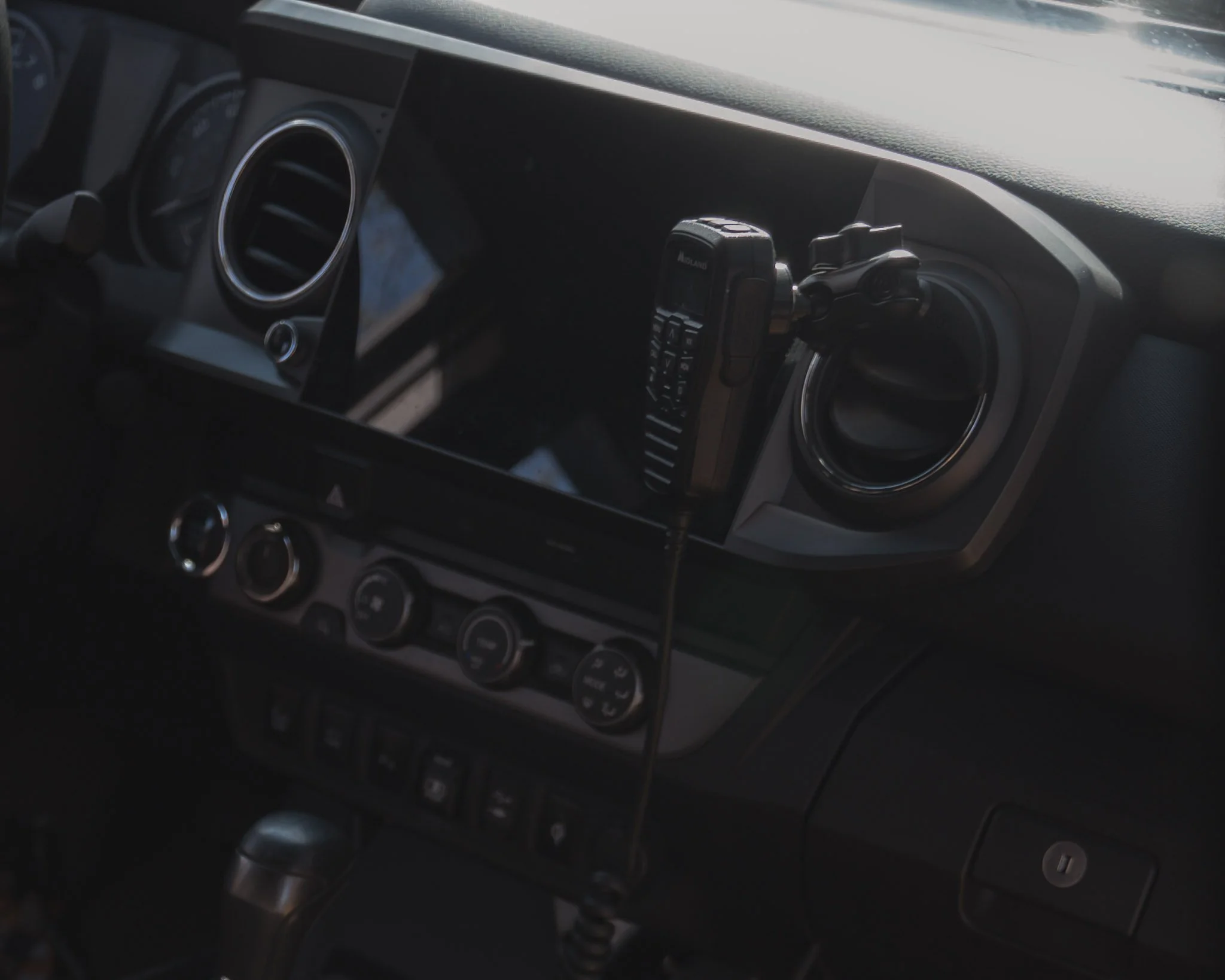
MY MIDLAND RADIO MOUNTED ON MY VENT WHERE IT’S LIVED FOR YEARS.
In the overlanding world, there’s a lot of things that cost $500 and up and anything less is somehow “cutting corners”. I don’t buy into that. I’ve been running the Midland MXT275 MicroMobile GMRS radio in my 2019 Tacoma for over three years now and I’ve never once wished I spent more money on a different radio.
If you’re researching GMRS radios for your overland rig and the price tags on some of the other options are making you hesitate, this is the review you’re been looking for.
This article contains affiliate links meaning I may earn a commission on purchases made using my links at no cost to you. Thank you for supporting Overlandaholic!What Is GMRS and Do You Actually Need a License?
Before getting into the radio itself it's worth addressing the question everyone has when they start researching GMRS. Yes, you need a license to legally operate a GMRS radio in the United States. No, it's not a big deal.
A GMRS license costs $35, requires no exam, is valid for 10 years, and covers your entire immediate family. You apply through the FCC's Universal Licensing System online, it takes maybe 20 minutes, and you'll have your license and call sign within a few days. I got mine and honestly the peace of mind knowing I'm operating legally is worth the $35 alone.
The reason GMRS is worth the license over the free FRS alternative is power and range. GMRS allows significantly higher wattage which translates directly to better range, especially in terrain with hills, trees, and the kind of remote areas overlanders spend time in. The MXT275 runs at 15 watts which is well above what any unlicensed FRS radio can do.
The Radio Itself
The MXT275 is a 15-watt GMRS mobile radio that operates on 22 channels with 142 privacy codes. The unit itself is surprisingly compact at about 4.5 by 2.75 by 1 inches. The main box is the brains of the operation and the handheld mic is what you actually use day to day. NOAA weather alerts are built in which is genuinely useful when you're somewhere remote and conditions can change fast.
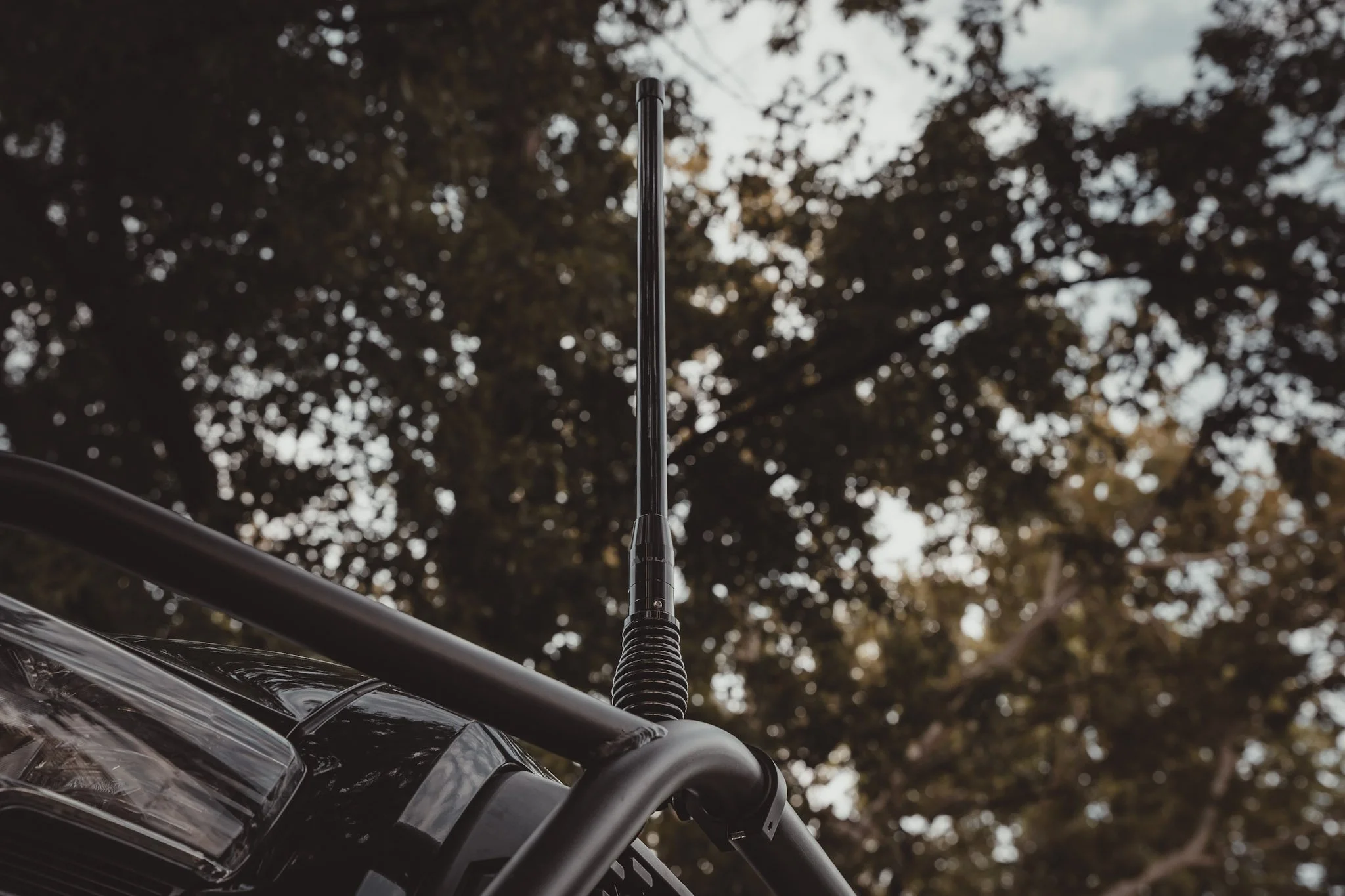
The MXT275VP4 bundle is what I'd recommend. It includes the radio, a Ghost antenna which is Midland's upgraded stubby antenna, and everything you need to get up and running. I also paired mine with the Midland Bull Bar Antenna which mounts cleanly to a roof rack or bull bar and extends your range beyond what the Ghost antenna alone can do.
The audio quality is crisp and clear even at highway speeds with the windows down. The 142 privacy codes mean you can operate in areas where other GMRS users are active without constantly picking up their traffic. The channel display is easy to read and the interface is straightforward enough that you're not fumbling with menus on trail.
One thing that took me a few minutes to figure out initially was changing the speaker output from the main unit to the handheld mic. It's not obvious in the menu but it's worth doing because the mic speaker is significantly louder and easier to hear in a moving vehicle. Once I figured it out I never looked back.
How I Installed It in My Tacoma
The install is genuinely easy even if you hate wiring. Here's how I ran mine.
I mounted the Bull Bar antenna to my Backwoods Adventure Mods bumper using a bull bar antenna mount I found on Amazon (and a lot of Loctite to keep it from loosening over time). I then ran the antenna cable through the grille, into the engine bay, and through the firewall to the inside of the cab. Getting the cable through the firewall is the trickiest part of the install and having a second person helps, but I managed it solo. Once it's through the firewall it comes out in the driver's side footwell.
From there I ran the cable through a hole in the back of the center console, up through the passenger footwell, and into the back of the glovebox. You may need to remove the panel near the cabin air filter to route the cable cleanly.
The MXT275 main unit sits in my glovebox with the mic cable coming out the side. The glovebox closes completely. I can reach over, grab the mic, and key up without looking away from the trail for more than a second. It's clean, nothing is visible unless you open the glovebox, and all the wiring is hidden.
Real World Range
I'm not going to give you a spec sheet range number because those are measured in ideal conditions over flat open terrain which isn't where any of us are actually wheeling.
What I can tell you is this. I was on a highway run with a group and one truck got off on a bypass. I kept going straight on the highway. We were still communicating clearly for about three minutes after we split which at highway speeds puts us well over a couple miles apart with buildings and terrain in between. That's real world range in an imperfect environment and it performed exactly how I needed it to.
In more typical trail use where you're in trees or hilly terrain the range is more than adequate for keeping a convoy together or coordinating when someone needs to stop. I've never been in a situation where I felt like the radio wasn't pulling its weight.
Three Years In
The unit still works exactly like it did when I installed it. No issues, no glitches, no degradation in audio quality. It lives in my glovebox full time which means it deals with Arkansas summers and cold winter mornings and it hasn't complained once.
For the money this radio is genuinely hard to beat. I've been around overlanders running $400 and $600 radios and I've never been in a conversation thinking I was the weak link in the chain because of my radio. The MXT275 does what it's supposed to do reliably and that's all I need from a piece of communications gear.
If you're new to GMRS and trying to decide whether to spend $150 on the MXT275 or $400 on something else, start here. Run it for a season. If you find yourself needing more you'll know what you actually need by then. Most people never outgrow it.
FAQ
Do I need a license to use the Midland MXT275? Yes. The MXT275 is a GMRS radio which requires an FCC license to operate legally in the United States. The license costs $35, requires no exam, is valid for 10 years, and covers your entire immediate family. You apply online through the FCC's Universal Licensing System and typically have your license within a few days. It's worth doing.
What is the real world range of the Midland MXT275? Realistically a few miles in terrain with trees and hills which is what most overlanding environments look like. I've maintained clear communication over two plus miles on a highway with buildings and terrain between vehicles. Midland advertises up to 50 miles which is a best case open field number. For trail use and convoy communication the range is more than adequate.
What antenna should I use with the Midland MXT275? The MXT275VP4 bundle comes with Midland's Ghost antenna which is a solid starting point. I run mine paired with the Midland Bull Bar Antenna mounted to my roof rack which gives better range than the Ghost alone. If you're serious about range an external antenna mounted high on your rig makes a noticeable difference.
Can I install the Midland MXT275 myself? Yes. The install is straightforward even if you're not a wiring person. The most challenging part is getting the antenna cable through the firewall. Budget a few hours for a clean hidden install. I've had mine in the glovebox with the mic cable out the side for three years and the glovebox still closes completely.
Midland MXT275 vs more expensive GMRS radios - is it worth upgrading? For most overlanders the MXT275 is all you need. It's 15 watts, has solid range, clean audio, and has proven reliable over years of real use. Higher end GMRS radios offer things like more wattage, built-in Bluetooth, and fancier displays but for convoy communication and trail use the MXT275 does the job. Start here and upgrade later if you find a specific reason to.
What's the difference between GMRS and FRS radios? FRS radios don't require a license but are limited to lower power output which means shorter range. GMRS requires a license but allows significantly higher wattage and removable antennas which translates to better real world range especially in terrain with obstacles. For overlanding use GMRS is the right choice.