
Why I’ll Never Use Another Ratchet Strap
It was a Saturday morning Facebook Marketplace run. New desk, good price, seller forty minutes out. I loaded it into the truck, grabbed my bag of ratchet straps from the back floorboard, and spent the next thirty minutes untangling them and fighting a jammed buckle. When I finally got it strapped down I had overtightened it causing the legs to bow in a bit. The whole drive home I watched a loose end of the strap smack against the side of my truck and wondered when the whole thing was going to loosen itself and fall out on the highway.
That was the last time I reached for a ratchet strap.
Rollercam cam-buckle straps replace ratchet straps for most overlanding and truck cargo applications. They tension by hand, release in one motion, and cannot overtighten. The Rollercam Overland Kit includes ten strap sizes in polypropylene webbing with a 350-pound Working Load Limit, covering roof rack loads, gear boxes, and bed cargo.
What Comes in the Rollercam Overland Kit
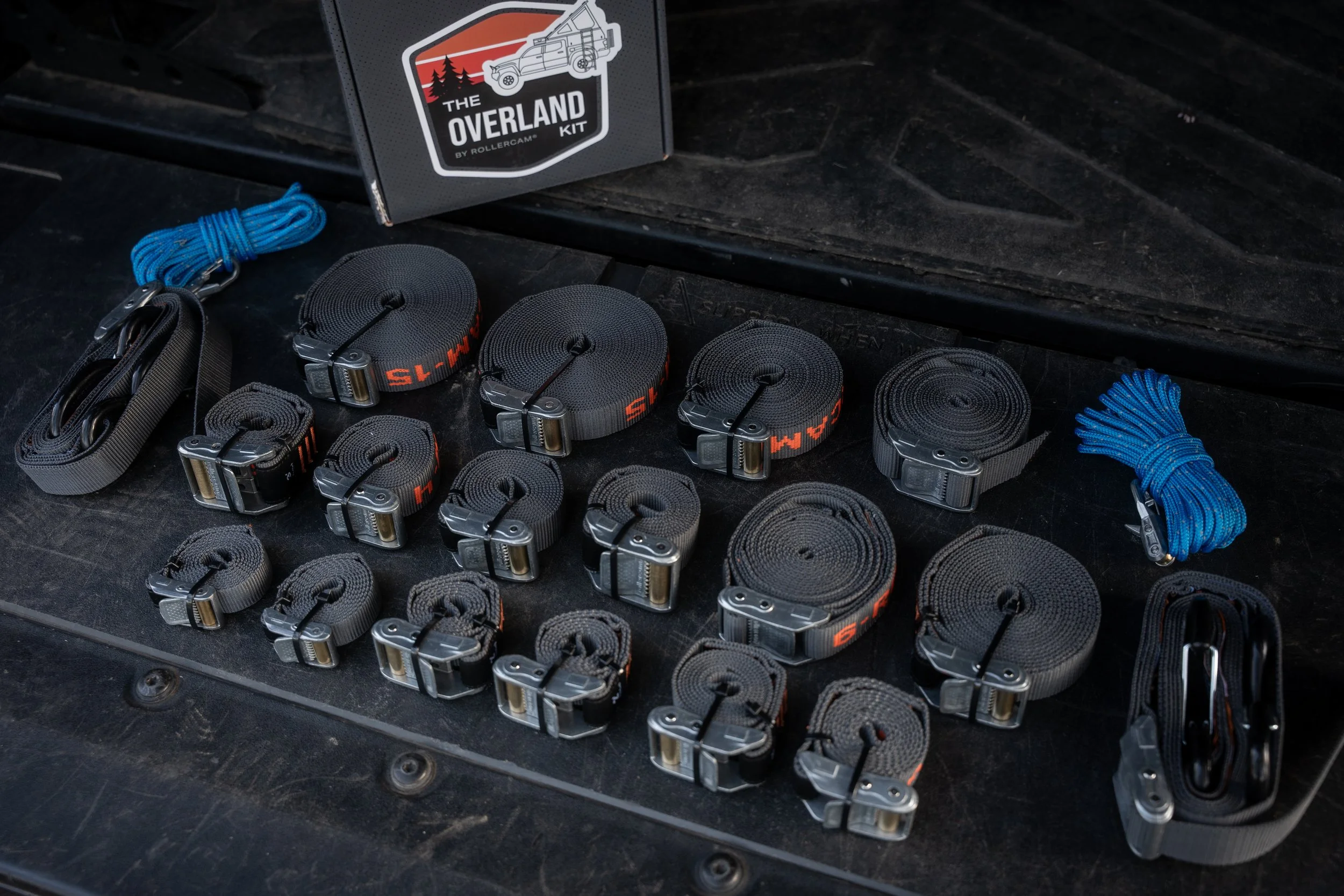
Rollercam sent me their Overland Kit a few months back. It sat on my workbench for about a day before I started pulling straps out of my old bag and replacing them one by one.
The kit covers essentially every tie-down situation you will run into. Two straps each in five lengths: 2-foot, 3-foot, 4-foot, 9-foot, and 15-foot, all straight end. A pair of 6-foot loop ends. A pair of 6-foot hook ends. Two narrower straps in 0.75-inch and 1.25-inch widths for lighter applications. A two-pack of Roperollers for managing cordage. Everything stows in a ripstop nylon bag that, unlike my previous ratchet strap situation, actually closes when you put everything back in it.
The straps are polypropylene webbing with triple-bar tack stitching and a 350-pound Working Load Limit (WLL). The length is woven directly into the webbing so you always know what you're grabbing without holding it up and guessing. These are not the bright orange Harbor Freight straps you bought three-for-ten-dollars in 2019.
Cam Buckle vs Ratchet Strap: How They Actually Differ
The mechanism takes about two uses to learn. Hold the lever, feed the strap through in the correct direction (teeth facing away from the webbing as you pull, not catching it), and pull tight. That's it.
The first time I fed it the wrong way I spent thirty seconds confused. The second time I did it right without thinking. By the third load I was running it one-handed.
Once it's cinched, it stays. The cam grips to tension and stops there. There is no ratcheting past the point of reason, no cranking down until you feel something shift under the cargo. Release is one motion. The strap glides free and rolls up clean.
The fundamental difference between a cam buckle and a ratchet strap is the tightening mechanism. A ratchet uses mechanical advantage to apply more tension than your hands alone could generate. That is useful for securing very heavy loads but creates real risk on lighter cargo where overtightening causes damage. A cam buckle is limited to hand tension, which makes it nearly impossible to overtighten and significantly faster to set up and release.
If I'm being honest, I didn't expect to care this much about a strap.
Tie Down Straps for Overlanding: Real Use Cases
The desk run was the turning point but these have been everywhere since.
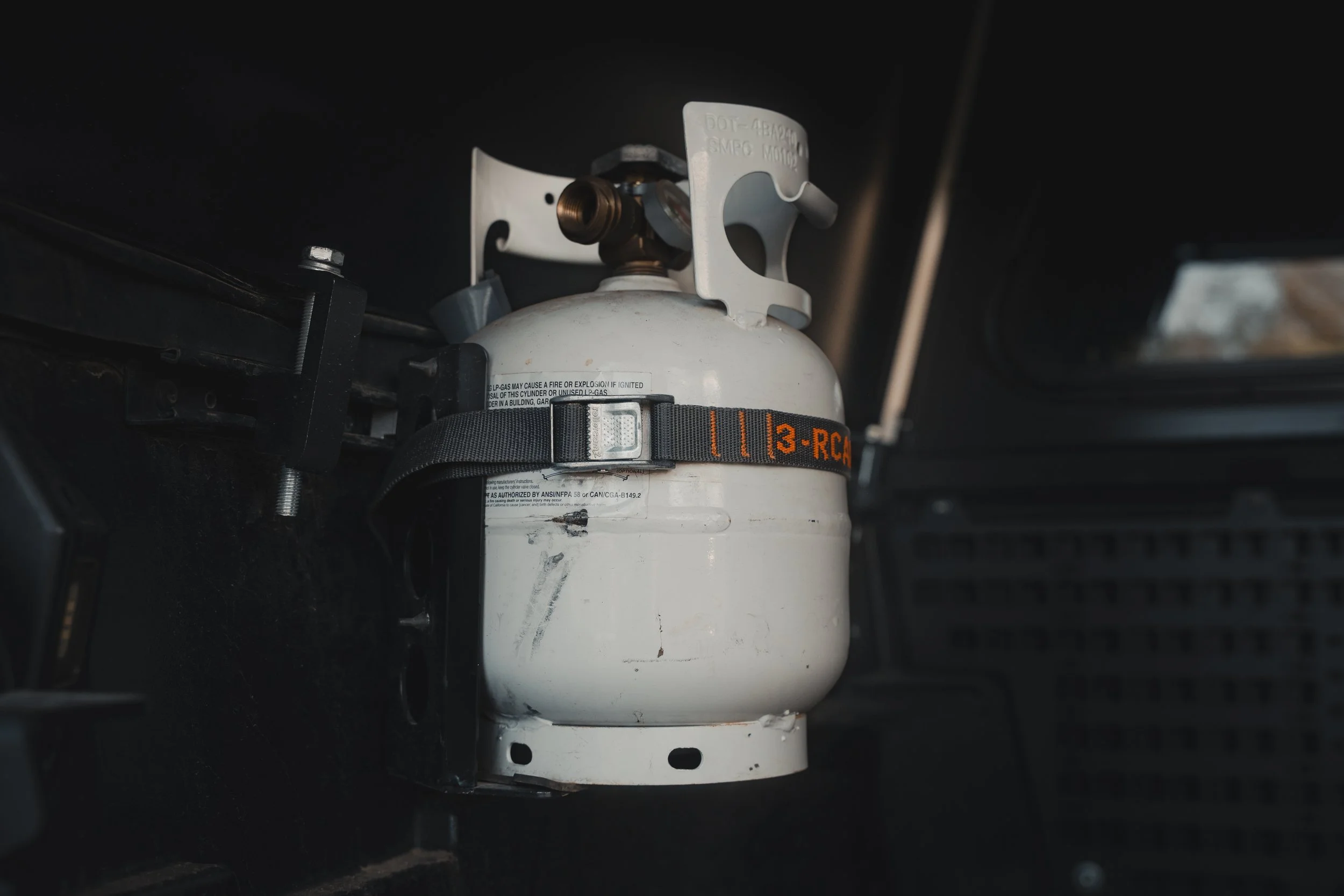
For example, I even replaced the latch on my propane tank mount permanently with one of the straps. It stays put, releases in one motion, and doesn't stretch out and lose tension over time. My gear boxes get strapped down with the 9-footers to keep them from sliding around the bed on wheeling trips. Firewood goes to the roof rack with the hook ends when I don't want it shifting in the bed on forest roads.
The range of lengths is what makes the kit actually work as a system. Old ratchet setup meant either coming up short or having two feet of extra webbing beating against the paint the whole drive in. With the Rollercam kit I can match the strap to the job within a foot or two, which means cleaner setups and nothing rattling loose on washboard.
For anyone running a roof rack with crossbars, the hook-end and loop-end straps are super convenient. They sit flat, they don’t flap around with the right length, and they loosen in one pull when you get to camp. That detail alone is worth the price of the kit after a long drive in.
Are Cam Buckle Straps Better Than Ratchet Straps?
Ratchet straps work. They hold. But they have always felt like a minor tax on doing anything. The untangling, the jamming, the overtightening, the moment you realize you cranked too hard and now you are wrestling the mechanism back the other direction in a parking lot while the seller watches.
Rollercam removes all of it. No tangle. No jam. No overtightening. No loose ends.
The one situation where ratchet straps remain the right call is high-load applications where you genuinely need the mechanical advantage of the ratchet mechanism. Vehicle recovery straps, securing heavy equipment, loads well above 350 pounds. For those jobs, the physics of a ratchet still matter. For everything else in my truck life for the past several months, the Rollercam straps have not been a limitation once.
The bag lives behind my seat now. The old ratchet straps are in a bin in the garage.
Frequently Asked Questions
Are cam buckle straps better than ratchet straps for overlanding? For most overlanding cargo applications, yes. Cam buckle straps like Rollercam tension by hand so you cannot overtighten them, release in one motion, and store without tangling. Ratchet straps are the right tool when you need to secure very heavy loads where the mechanical advantage of a ratchet matters. For roof rack loads, gear boxes, and bed cargo, cam buckle straps are faster and safer for your gear.
How tight should cam buckle straps be? As tight as you can pull by hand. That is the design. The cam grips to whatever tension you apply and holds it there. Unlike ratchet straps, there is no mechanism to exceed your hand strength, which is why cam buckle straps protect cargo from overtightening damage.
Can Rollercam straps be used on a roof rack? Yes. The hook-end and loop-end versions in the Overland Kit are built for roof rack and crossbar use. I use the 6-foot hook-end straps for firewood and gear on my Tacoma roof rack regularly.
What is the working load limit of Rollercam Expedition straps? The Rollercam Expedition series has a 350-pound Working Load Limit (WLL). That covers the vast majority of overlanding cargo applications including coolers, gear boxes, firewood, and rooftop luggage.
Do cam buckle straps loosen over time? Standard cam buckles can lose tension if the cam wears out or the strap stretches. The Rollercam patented buckle design holds tension without loosening during transport. I have not had a strap shift on me in several months of regular use across highway miles and dirt roads.
The Bottom Line
The Rollercam Overland Kit runs $165. If you are still untangling ratchet straps in parking lots and at trailheads, this is the upgrade. I would not go back.
Rollercam provided this kit for review. All opinions are my own. Some links on this page may be affiliate links, which means I earn a small commission if you purchase through them, at no additional cost to you.